Your Loyalty Programme Is Not the Problem. Your Customer Engagement Might Be.
Businesses invest heavily in loyalty platforms and rewards, then wonder why members stay passive. The missing piece is often not the programme itself. It is the CRM and engagement layer that turns customer data into action.
Most organisations get loyalty backwards. They believe that if they build a compelling programme — attractive rewards, clear tiers, an app that works — customers will engage naturally. They do not. A loyalty programme without active, relevant engagement is a value store with no marketing. The customer signs up, earns points, forgets about the programme for months and only remembers it when they receive an expiration notice. That is not loyalty. That is a dormant account.
The gap between membership and engagement is where most programmes fail. Membership is a metric of reach. Engagement is a metric of relationship. A programme with two hundred thousand members and a fifteen percent active engagement rate is underperforming regardless of how attractive the rewards look on paper. The question is not whether customers are members. It is whether the programme is changing how often they visit, how much they spend and how they feel about the brand when a competitor offers a similar discount.
Batch-and-blast marketing is the default engagement model in many organisations. A campaign is designed, a segment is selected and the same message is sent to every member in that segment at the same time. The result is communication fatigue: messages that are irrelevant to most recipients, ignored by many and resentful to some. The customer who buys coffee every morning does not need an offer for coffee. The customer who has not visited in eight weeks does not need a reminder of the programme they have already decided to ignore. Generic communication does not activate members. It trains them to stop paying attention.
Lifecycle marketing is the alternative. It structures engagement around the customer's actual behaviour rather than the organisation's campaign calendar. A new member receives a different sequence from a long-term member. A customer who has just made a large purchase receives a different message from a customer who has not visited in six weeks. A customer who has redeemed a high-value reward receives a different follow-up from a customer who has never redeemed at all. Lifecycle marketing respects the fact that the right message depends on where the customer is in their relationship with the brand, not on which segment the data team put them in last quarter.
Personalisation is the layer that makes lifecycle marketing effective at scale. It uses the customer's actual behaviour — purchase history, channel preference, product affinity, response to previous offers — to determine the content, timing and channel of the next communication. A customer who always opens emails on Tuesday morning should not receive the same send-time as a customer who only checks their phone on Saturday afternoon. A customer who buys organic products should not receive offers for conventional ones. Personalisation is not a nice-to-have. It is the mechanism through which the programme demonstrates that it knows the customer well enough to treat them as an individual rather than a row in a database.
Activation, retention and win-back are the three journeys that matter most. Activation is the first thirty to sixty days after a member joins. If the programme has not engaged the customer meaningfully by then, the probability of long-term active membership drops significantly. Retention is the ongoing relationship with the active member. It requires consistent, relevant communication that reinforces the value of staying rather than leaving. Win-back is the campaign directed at lapsed members. It needs to be honest about why the customer left and offer something that makes return worth the effort. All three journeys require coordination between the loyalty platform, the CRM system and the channels through which the brand communicates.
The right message at the wrong moment can still fail. A personalised offer sent to a customer who is already overwhelmed with brand communications will be ignored. A win-back campaign sent to a customer whose last experience with the brand was a service failure will feel tone-deaf. Timing, tone and channel are as important as content. The best engagement programmes treat each communication as part of a continuous conversation rather than a one-off transaction. They understand that the customer's attention is limited and that every irrelevant message reduces the probability that the next relevant message will be read.
Knowing your customer is worth nothing until you act on it. The data, the segments, the analytics and the platforms are infrastructure. They create value only when they drive communication that changes customer behaviour. That is the engagement layer, and it is the piece most organisations underinvest in. If your loyalty programme has strong economics and attractive rewards but members remain passive, the problem is almost certainly not the programme. It is the CRM and engagement strategy that should be bringing it to life.
The most common objection to investing in engagement is that it is too expensive relative to the expected return. That objection usually comes from looking at engagement as a cost centre rather than as a multiplier. A loyalty programme with a solid proposition and poor engagement is like a retail location with great products and no footfall. The investment in stock, staff and premises is wasted because nobody is coming through the door. Engagement is the footfall. It is the marketing, the messaging, the timing and the channel strategy that connects the programme to the customer's actual life. Without it, the rest of the investment is underutilised.
There is also the question of measurement. Engagement is harder to measure than acquisition because it is distributed across multiple interactions over time. The organisations that get the most from engagement invest in the right leading indicators — open rates, click-through rates, redemption rates, changes in visit frequency and spend — and they track those indicators consistently. They do not wait for the lagging indicator of churn to tell them something is wrong. They watch the behaviour that predicts churn and intervene early, before the relationship has cooled.
The final piece is leadership commitment. Engagement programmes fail when they are treated as campaigns rather than as continuous capabilities. They need consistent investment, clear ownership and a team that is measured on long-term relationship metrics, not short-term campaign metrics. That requires the leadership team to believe that customer relationships are worth nurturing over months and years, not just maximising in the moment. The organisations that understand this treat engagement as a strategic priority, not a marketing afterthought. And that is the difference between a loyalty programme that quietly erodes margin and one that genuinely changes customer behaviour.
More insights

The Loyalty Problem Nobody Wants to Talk About: Bad Customer Data
You can have the most sophisticated loyalty strategy, the most compelling rewards and the most elegant CRM platform — and it will still underperform if the customer data underneath it cannot be trusted. Here is why data quality is the discipline everything else depends on.
Your Loyalty Programme Isn't Underperforming. It's Standing Still.
Most loyalty programmes don't fail with a bang. They become less relevant gradually. Here is why stagnation is usually a change-management problem — and why the next relaunch won't save an organisation that cannot move.
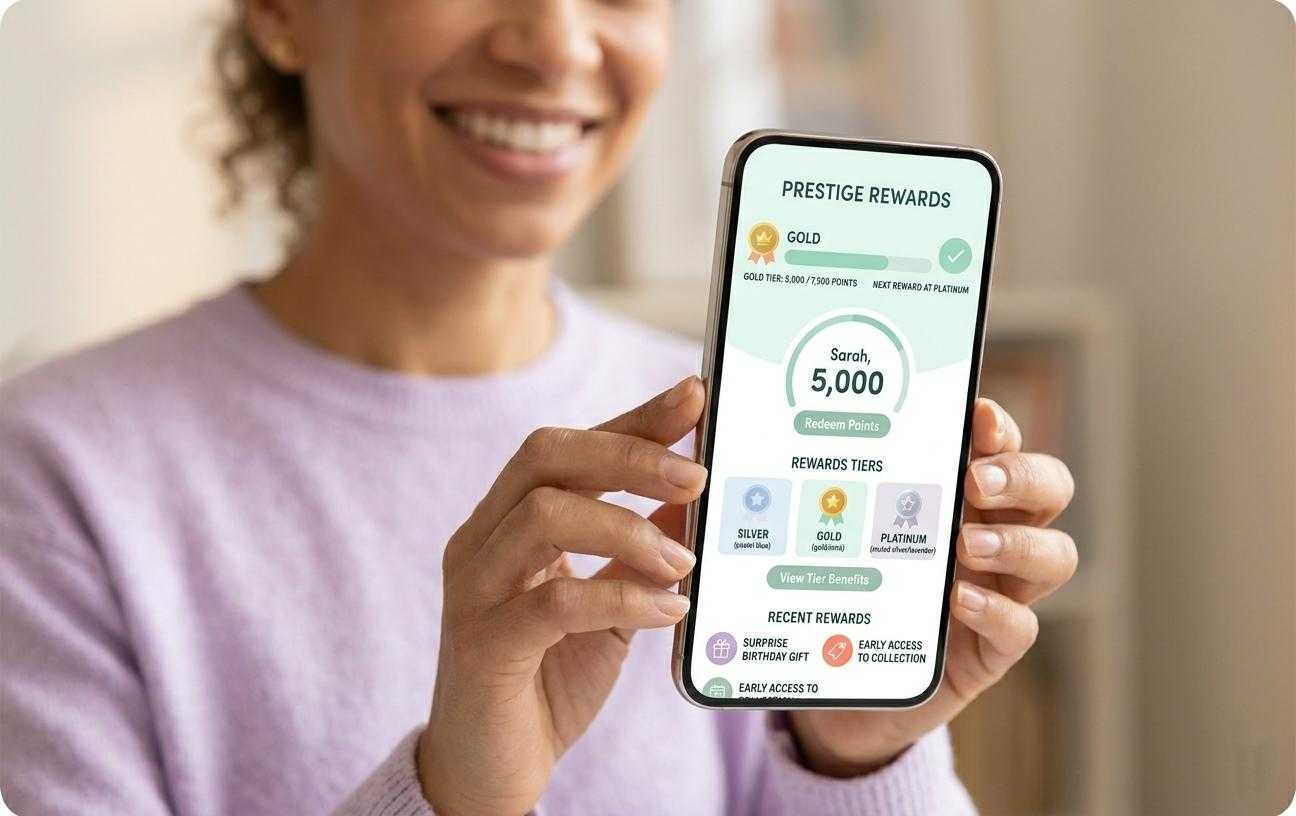
Culture, Not Campaigns: Why Loyalty Adoption Is a Change-Management Problem
Most loyalty programmes are measured as marketing outcomes, but adoption is a behaviour-change problem. When organisations move to a new programme, culture is often the variable that determines whether the change sticks — and the asymmetry between head-office dissatisfaction and frontline cost of change is a warning sign for any loyalty transition.
Book a consultation
Explore your loyalty, CRM or customer data challenge with Martin Ngoni.
Book a consultation